The Woven Terrain
Project overview
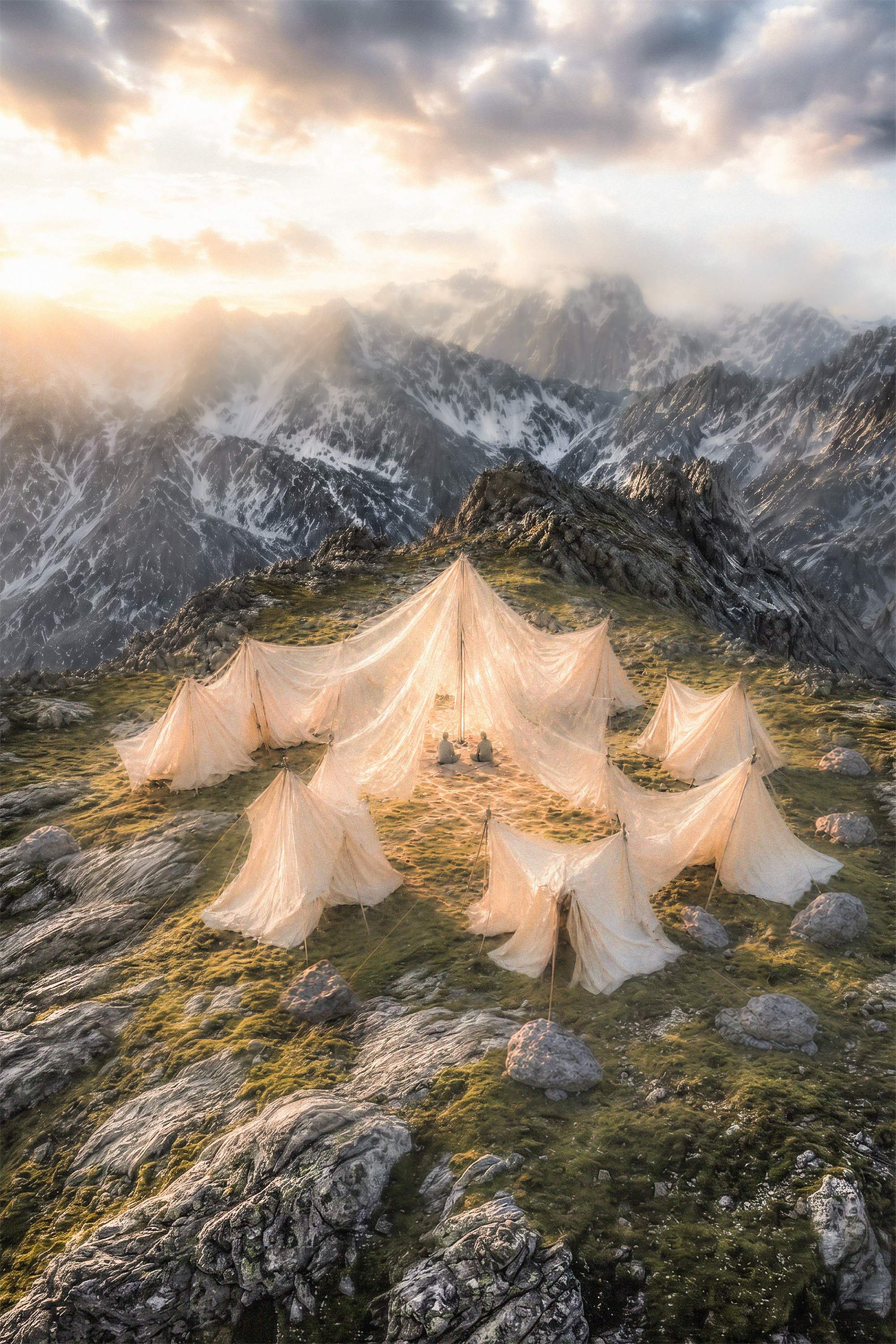
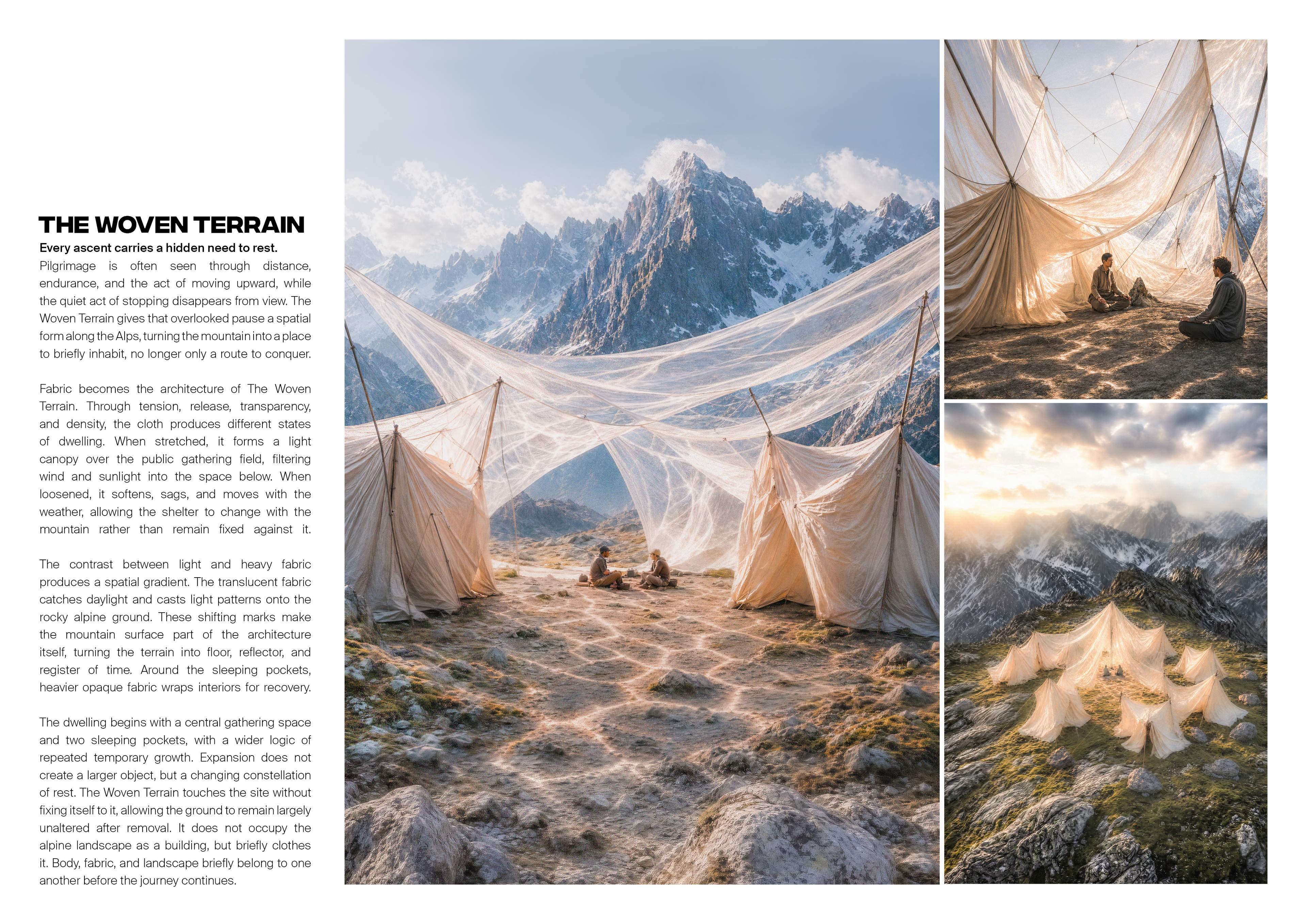
Pilgrimage is often seen through distance, endurance, and the act of moving upward, while the quiet act of stopping disappears from view. The Woven Terrain gives that overlooked pause a spatial form along the Alps, turning the mountain into a place to briefly inhabit, no longer only a route to conquer.
Specifications
Site | Swiss Alpine |
Date | 2026 |
Status of the project | Concept |
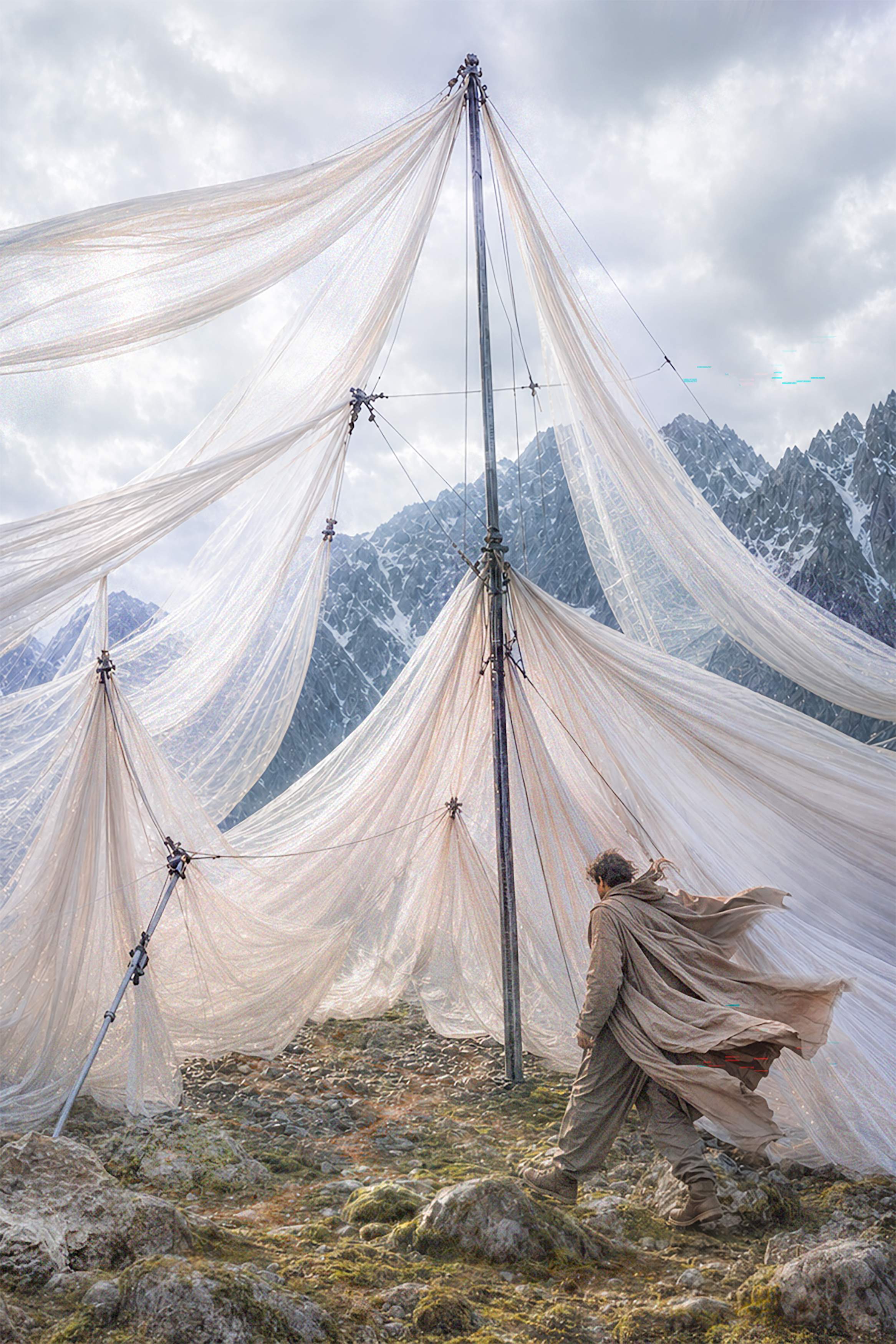
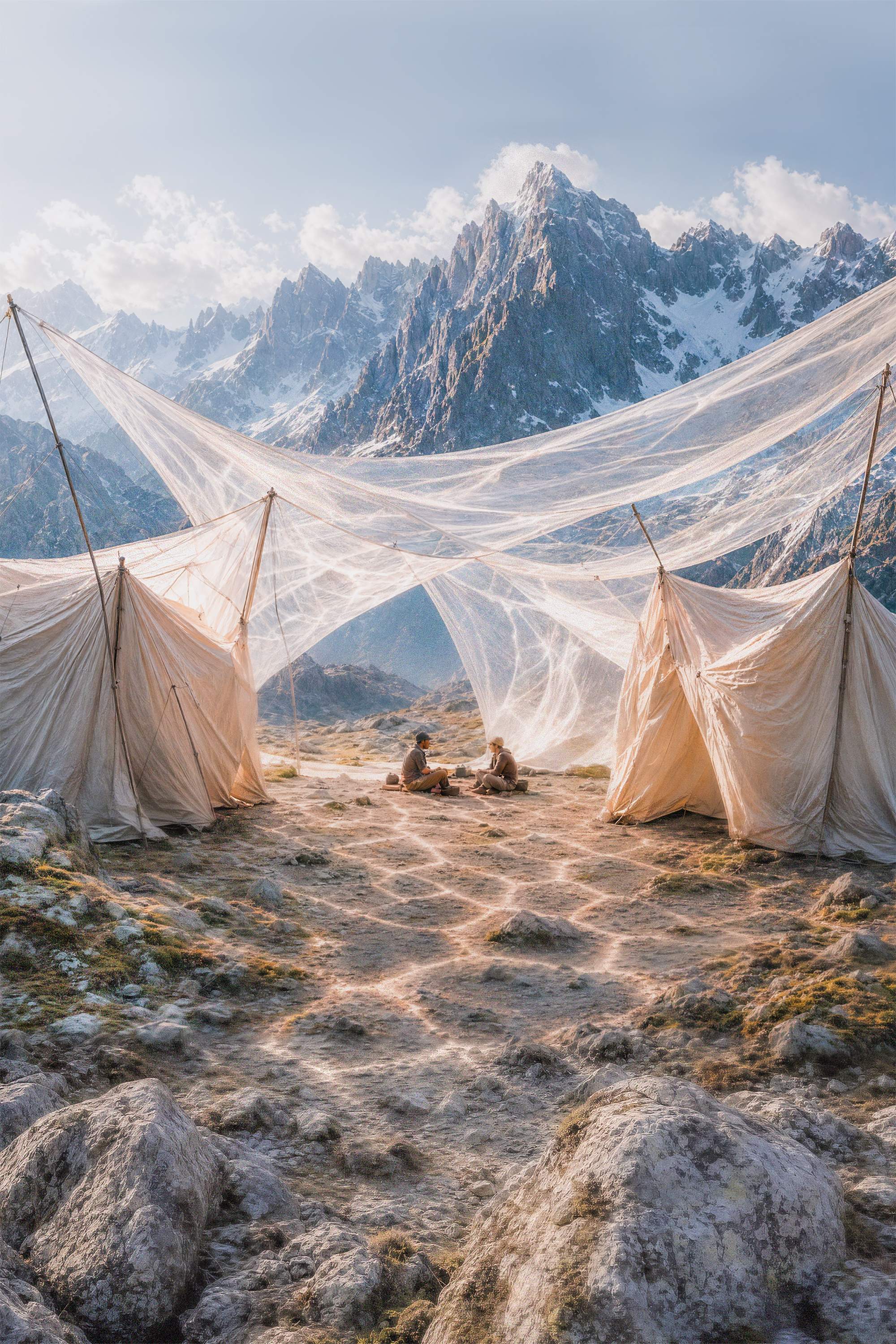
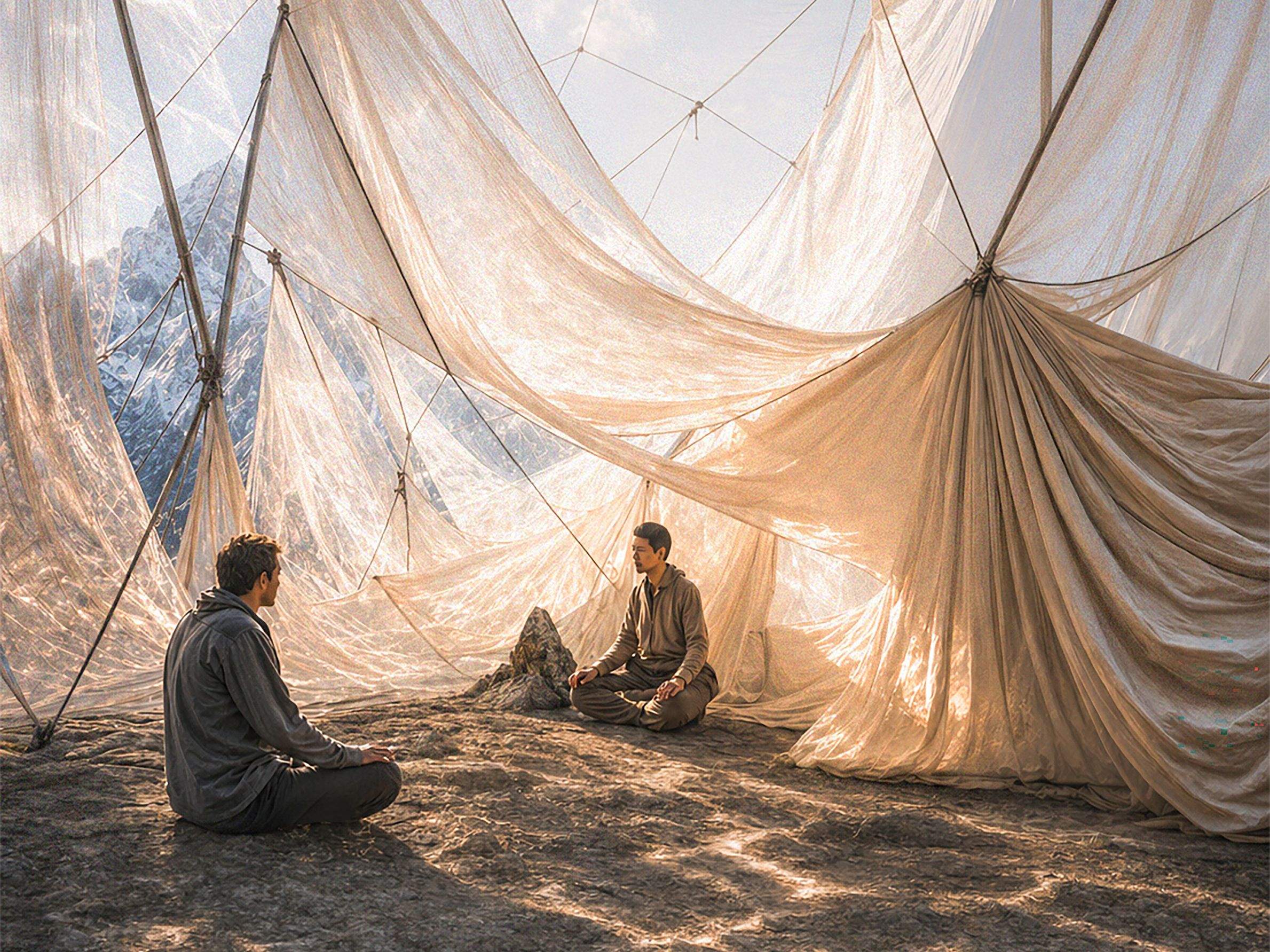
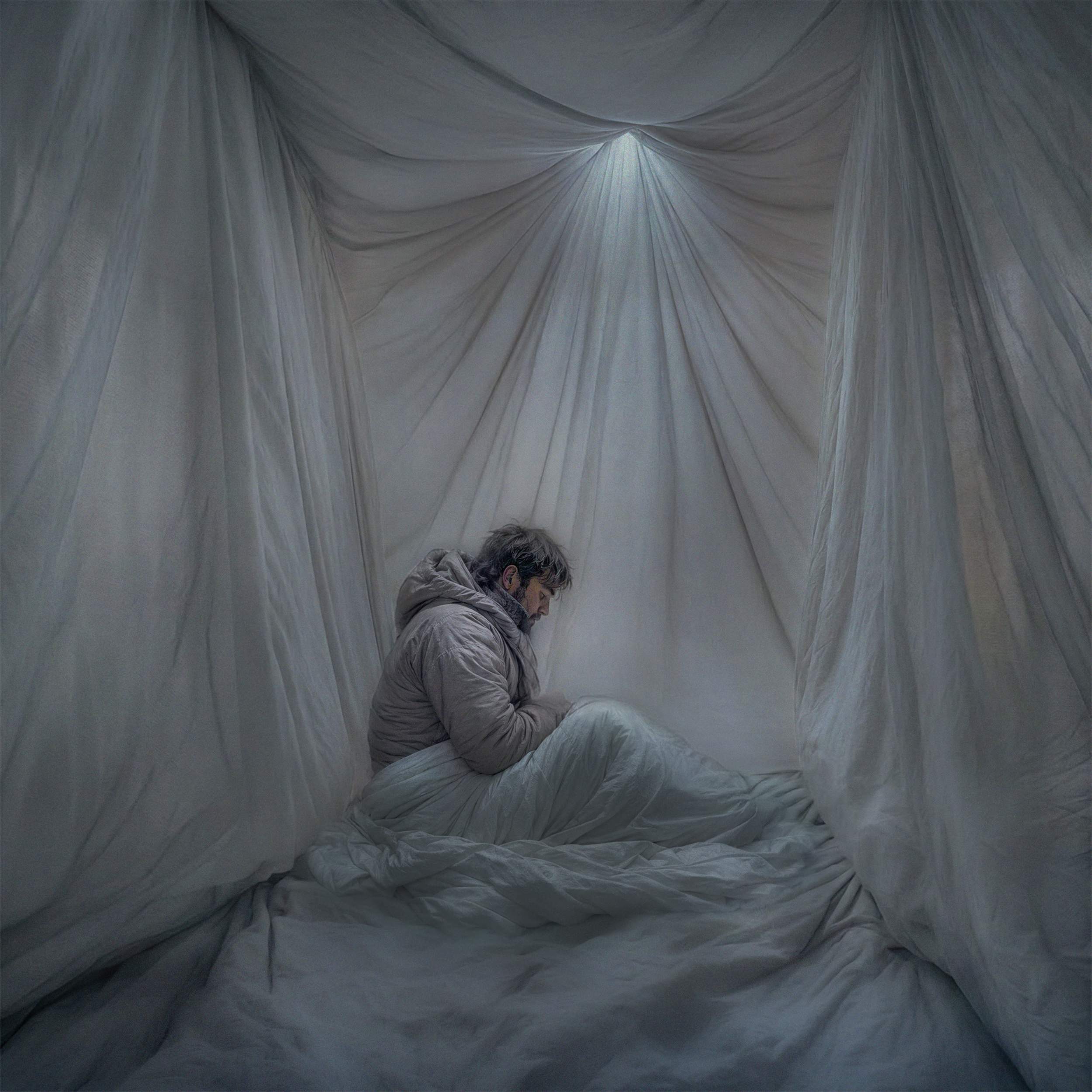
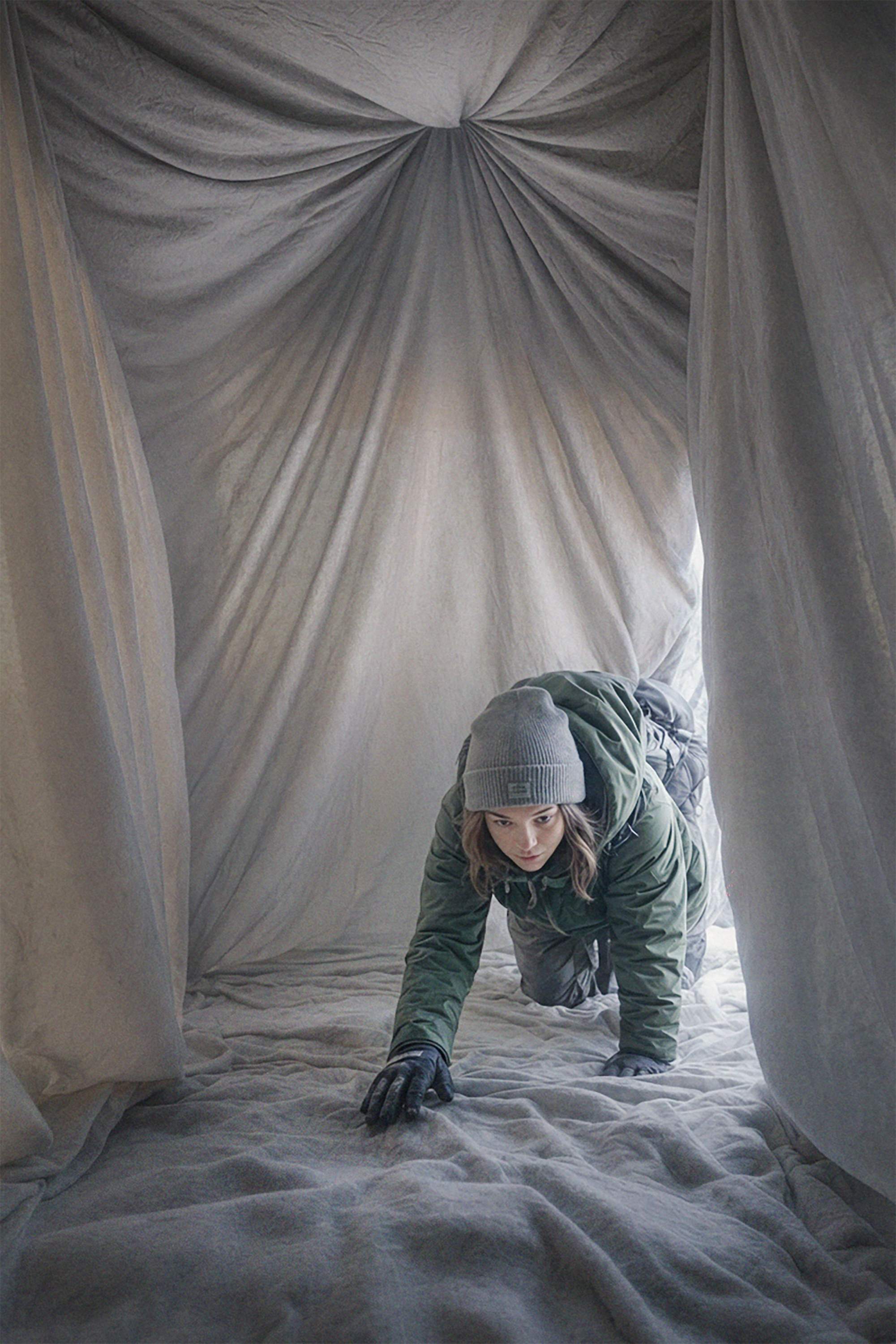
The Fabric and The Light
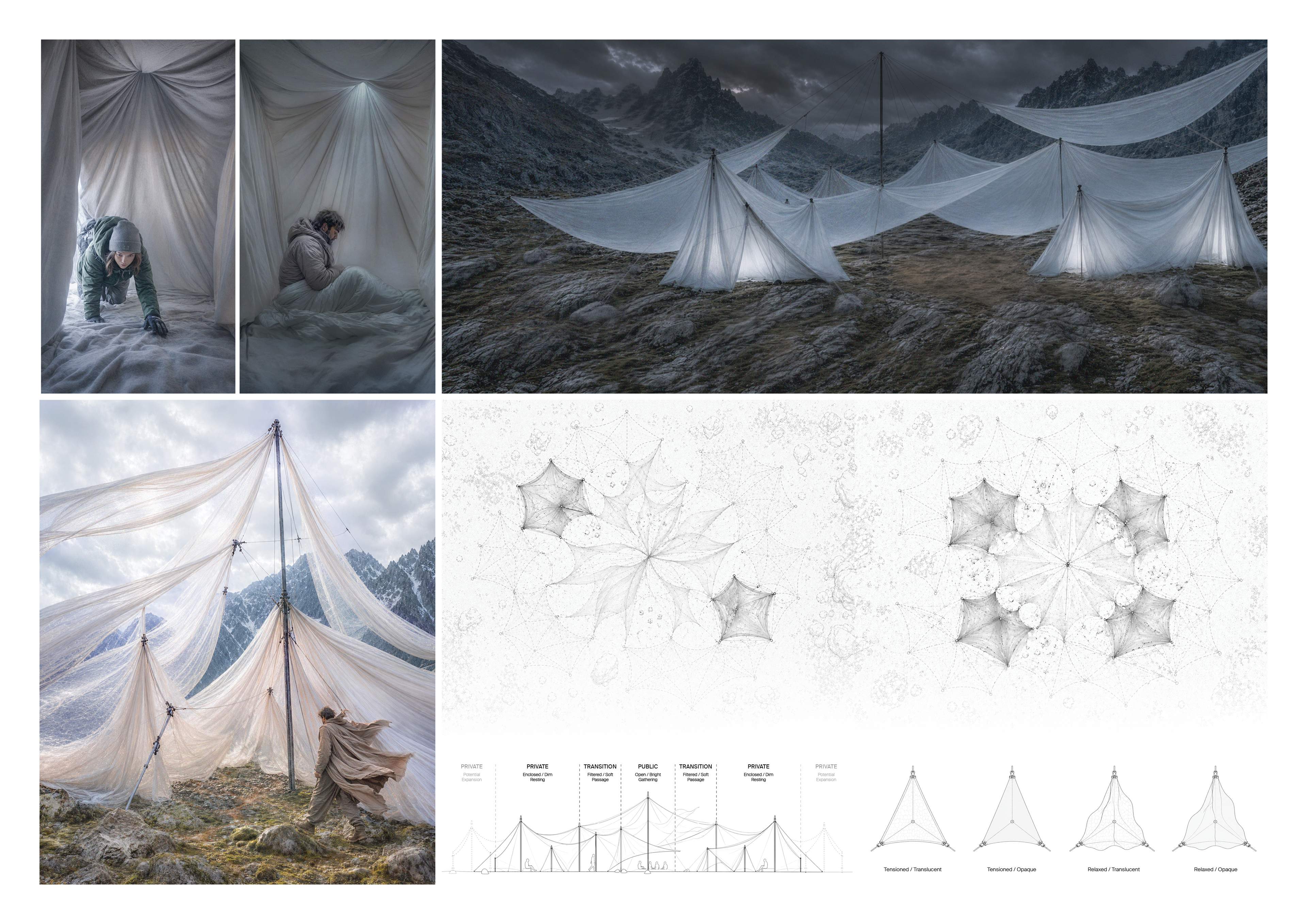
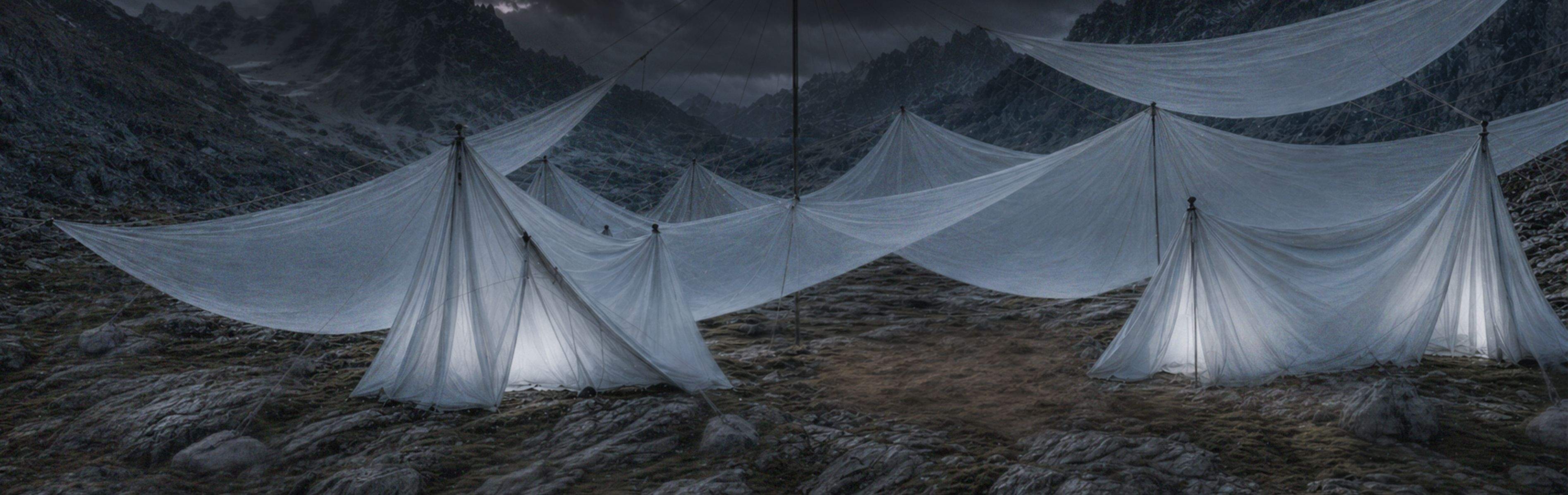
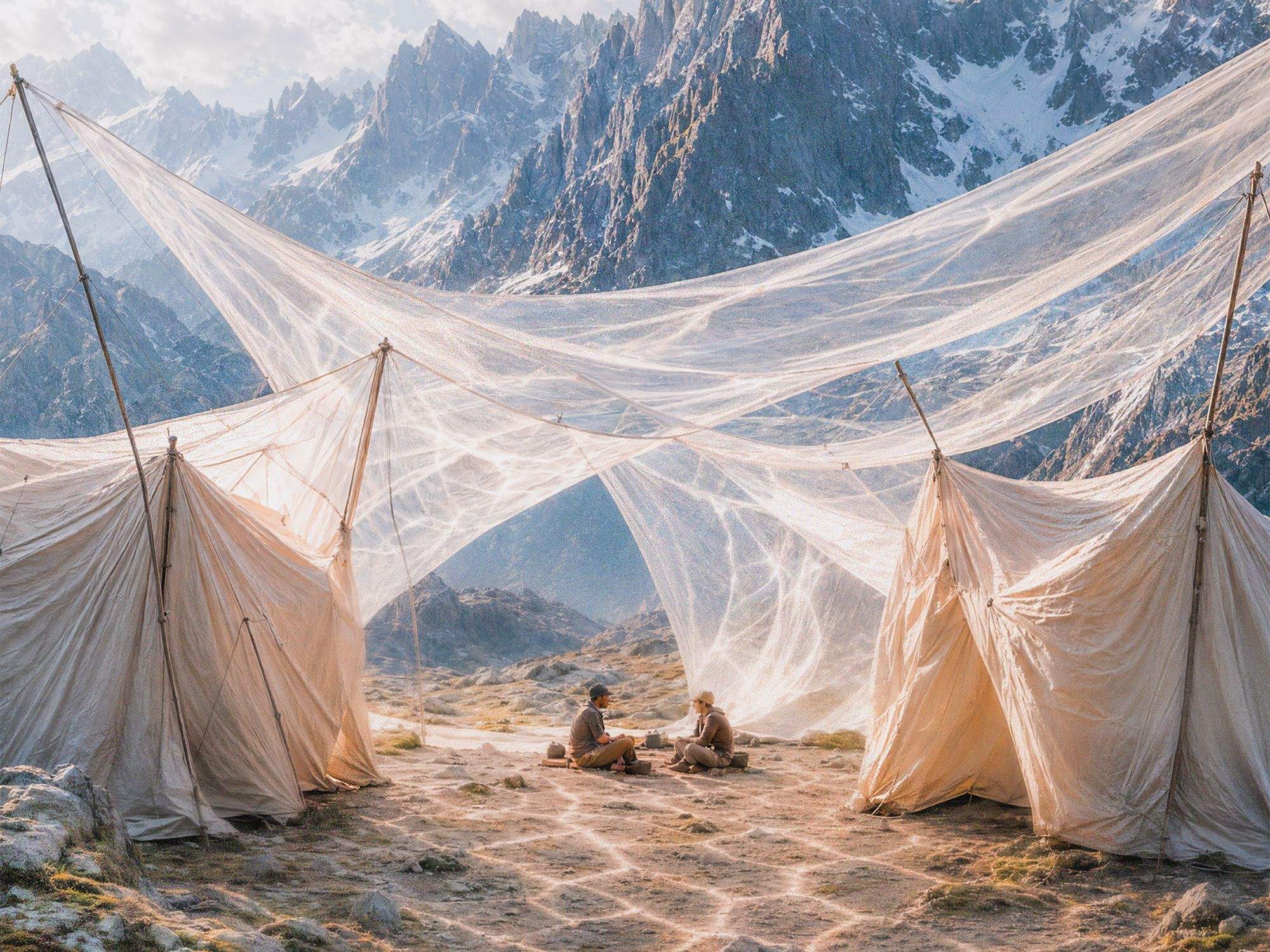
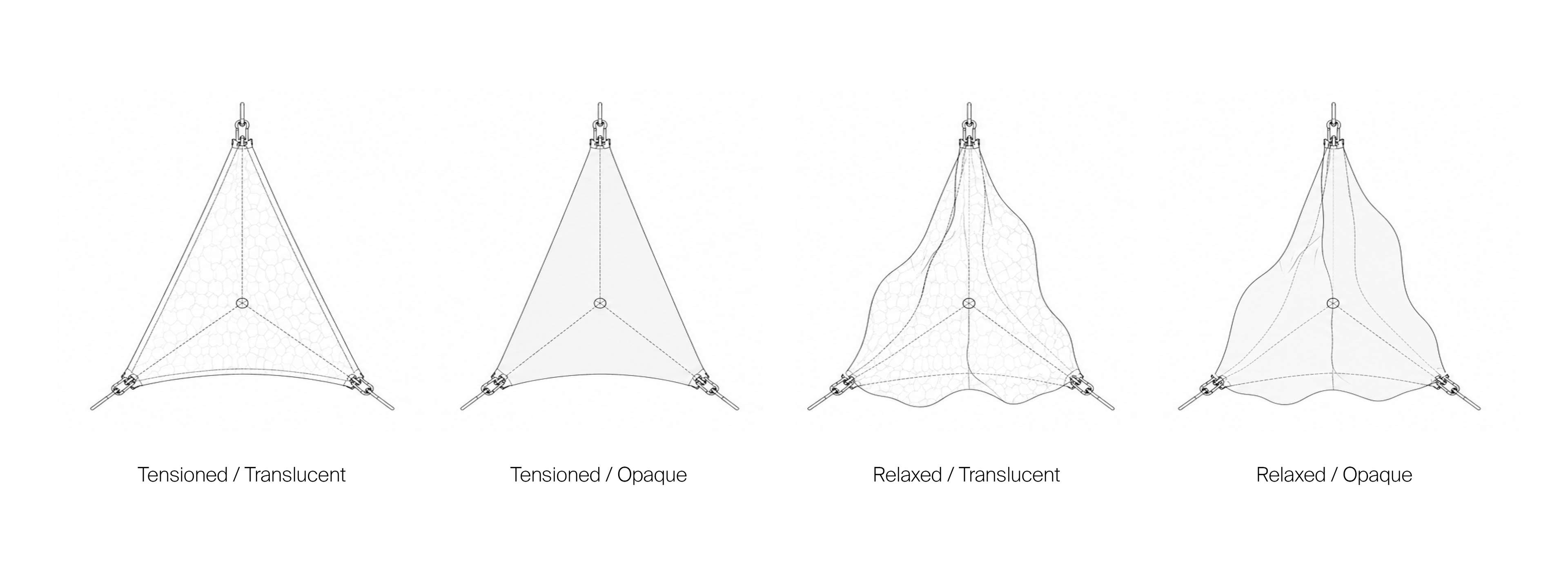
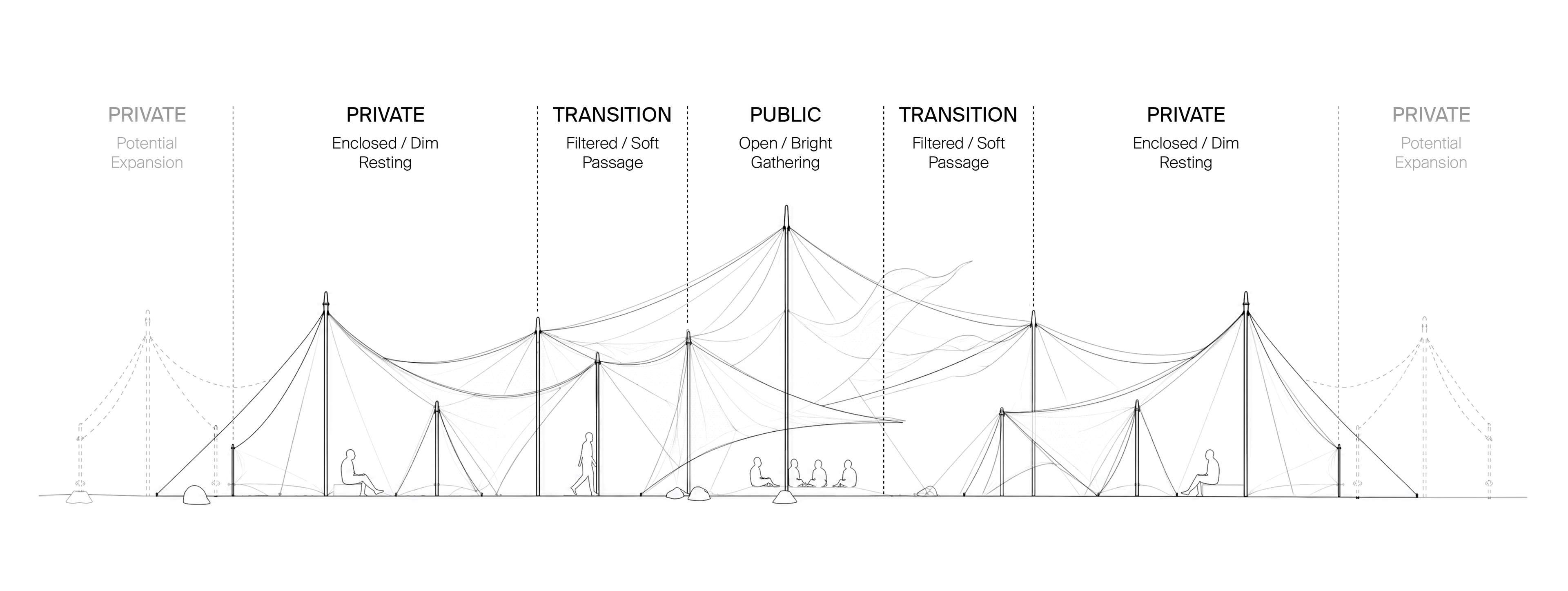
Fabric becomes the architecture of The Woven Terrain. Through tension, release, transparency, and density, the cloth produces different states of dwelling. When stretched, it forms a light canopy over the public gathering field, filtering wind and sunlight into the space below. When loosened, it softens, sags, and moves with the weather, allowing the shelter to change with the mountain rather than remain fixed against it.
The contrast between light and heavy fabric produces a spatial gradient. The translucent fabric catches daylight and casts light patterns onto the rocky alpine ground. These shifting marks make the mountain surface part of the architecture itself, turning the terrain into floor, reflector, and register of time. Around the sleeping pockets, heavier opaque fabric wraps interiors for recovery.
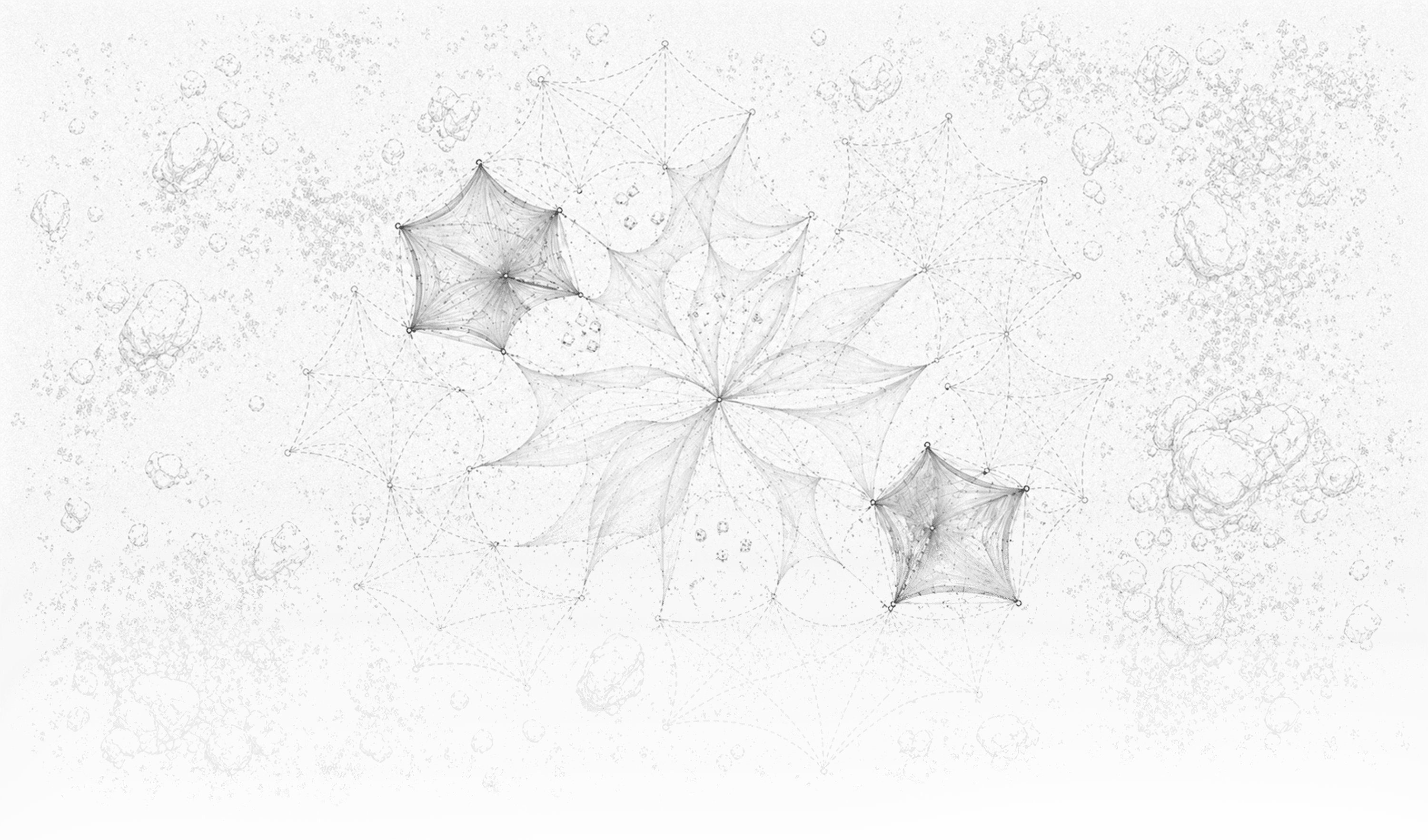
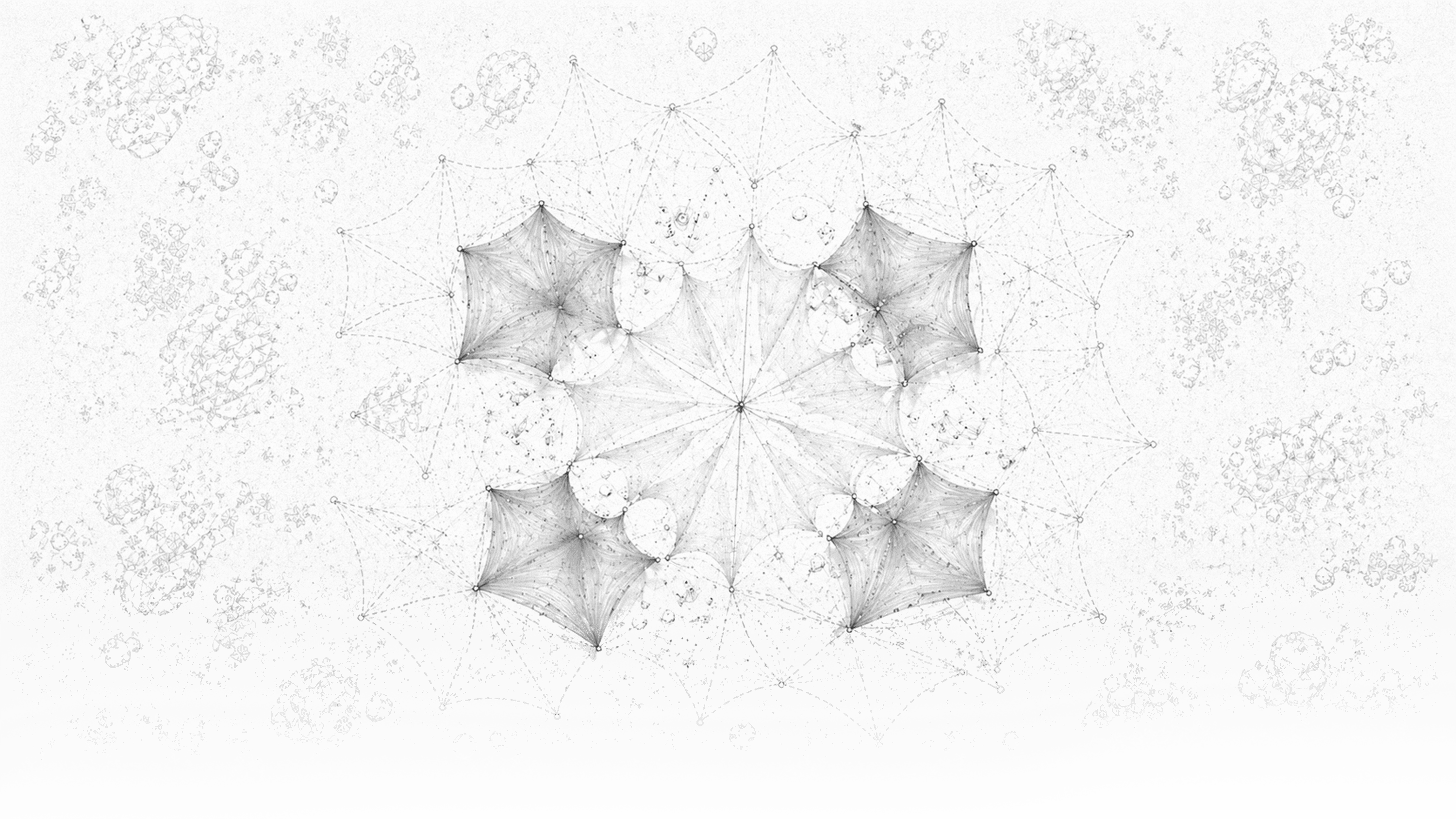
The dwelling begins with a central gathering space and two sleeping pockets, with a wider logic of repeated temporary growth. Expansion does not create a larger object, but a changing constellation of rest. The Woven Terrain touches the site without fixing itself to it, allowing the ground to remain largely unaltered after removal. It does not occupy the alpine landscape as a building, but briefly clothes it.
CLOTHED SPACES
Shortlisted Project